

One must always be drunk.
That’s the only issue, nothing else matters.
Intoxicate yourselves without pause,
so you won’t feel the horrible burden of Time
crushing your shoulders,
bending you to the ground.
But with what?
With wine, with poetry, or with virtue, whatever you prefer.
But get drunk.
Charles Baudelaire, Be Drunk, in Paris Spleen
The euphoria evoked by Charles Baudelaire resonates familiarly within our contemporary society. His invitation is not merely a poetic exhortation, but rather an expression of the condition of modern man, in which the act of becoming euphoric, though seemingly liberating, manifests as a compulsion to escape, to fill a void, to numb sensation. A need to flee.
Baudelaire himself sought in wine, opium, and hashish a means of escape from spleen, that condition of profound melancholy that inhabited his being and nourished his poetry. Yet even in his case, what began as a search for freedom and a way to soothe anguish ultimately revealed itself as a vicious cycle, a trap with no exit.
Baudelaire’s frenzied euphoria becomes a metaphor for pathological dependency, not merely as an act of escape or transgression, but as a failed attempt to attain a form of freedom that paradoxically turns into a new kind of enslavement, dragging the subject toward the abyss. What is at stake is no longer just the euphoria evoked by the damned poet, nor the existential condition of a distressed artist, but rather pathological dependencies that today spread epidemically, silently insinuating themselves into the routines of everyday life.
Pathological dependency refers to a condition in which the subject is dominated by a recurrent, irresistible urge that is resistant to control, compelling them to consume substances such as drugs, alcohol, or medication, or to engage in behaviors that produce dependency, the so-called new addictions. In these cases, a habit evolves into a spasmodic search for pleasure or a strategy to avoid psychic discomfort, eventually resulting in a pathological condition that compromises the individual’s functioning and generates suffering, as well as social, emotional, and occupational maladjustment.
New forms of dependency have become increasingly pervasive and insidious presences in contemporary society, where individuals are no longer dependent solely on drugs or psychoactive substances, but also on dysfunctional behaviors, often socially accepted, and at times even encouraged. In such cases, the attachment is not formed with a substance, but with objects or activities rooted in everyday life. Thus, relationships, sex, exercise, work, shopping, smartphones, computers, and digital algorithms become escape ways that promise, indeed, deceptively suggest, to soothe the soul, that part of the soul which Plato called the epithymetikón, the seat of impulses and desires.
What gives rise to our need to escape today? Who or what are we running from, and what do we want to free ourselves from?
Massimo Recalcati defines pathological dependencies as new forms of enslavement, characterized by an eclipse of the human experience of desire. This condition emerges as a subjective difficulty, proper to the contemporary subject, in the very act of desiring. According to Recalcati, the primary cause of the extinction of desire lies in a profound metamorphosis that has passed through our society, in which lack, from which desire normally arises, capable of generating vital movement, has been transformed into emptiness.
The close connection between lack and desire can also be found in Platonic thought, particularly in the genealogy of Eros presented in the Symposium, where Eros embodies desire as a universal force tied to life and directed toward generation. Eros is the offspring of the peculiar union between Penìa, poverty, symbol of lack, and Póros, resourcefulness, emblem of ingenuity and seeking. From his mother he inherited the condition of lack, and from his father the ability to search and invent. Eros desires precisely because he is lacking: he is neither beautiful nor ugly, and for this reason he desires beauty; he is not good, nor evil, and therefore desires goodness; he longs for wisdom because he is deprived of it, but for this very reason he is not ignorant.
Desire, as in the case of Eros, is rooted in lack, and is its vital, creative, and generative expression; it is what sets life in motion. Therefore, a life without desire is a life that fades away.
According to Lacan, the human being is structurally marked by lack and desire, and is constitutionally dependent on the Other, understood as the locus of language and desire. Desire is configured as a movement of openness toward the Other, in search of a symbolic compensation capable of filling the original lack, as happens, for example, in love. But precisely because this lack is structural, every compensation remains inevitably partial, and desire never finds an object capable of filling it completely.
In pathological dependency, the subject rejects their structural dependence on the Other. Resorting to the object thus becomes a paradoxical way in which the human being attempts to free themselves from this bond, pursuing an illusory a desperate quest for self-sufficiency.
In this process, the subject detaches from the relationship with the Other and replaces it with an inhuman partner, whether a drug, a psychotropic, food, alcohol, a technological device, or something else, transforming the relationship into a solitary and absolute bond with the object.
What manifests, then, is a drive to no longer depend on anyone. Yet this apparent freedom leads to a fall, because the illusion of emancipation reveals itself as a radical form of enslavement. The object of dependency appears as something that saves, that prevents abandonment, the trauma of separation, the wound inflicted by the Other, which often reactivates more ancient wounds. It functions as a painkiller, capable of anesthetizing emotions and feelings. It presents itself as a reassuring presence, an antidote against the anguish generated by dependence on the Other. In this sense, it serves to suppress the restlessness of desire and to free the subject from the bond with the Other.
Addictive substances are, as Freud would say, “thought-banishing agents,” capable of offering a remedy for the pain of existence; they are pharmakon in the Platonic sense of the word, both remedy and poison, capable on the one hand of soothing the restlessness of desire and suffering, and on the other of introducing a form of enslavement. The same ambivalence runs through Baudelaire’s The Flowers of Evil, whose poems offer relief, promise elevation, and yet transmit the original poison, the very evil from which they bloomed.
The object promises fulfillment, but ends up producing an emptiness that makes the subject its prisoner, just as in Baudelaire’s wine, where euphoria represents an ephemeral escape, allowing one to forget the sufferings of life, yet at the same time inducing a numbness of the senses and of the soul, concealing within itself a hidden trap.
The origin of today’s epidemic spread of pathological dependencies must be traced back to the market, which is responsible for the nihilistic transformation of lack into emptiness, and which embodies what Jacques Lacan defines as the “discourse of the capitalist”, according to which the human being can find salvation and happiness only through consumption. Within this logic, lack, the constitutive structure of desire, is transfigured into a void to be filled immediately and compulsively. The market presents itself as savior, each time offering a new object as the solution to human suffering. But the object, which should soothe the restlessness of desire, merely nourishes a new form of enslavement: dependency. In treating discomfort, the pain of existence, that is, the very lack that constitutes us, new forms of dependency suggest filling the void as quickly as possible. The paradox is that these objects, offered without limit by the market, never bring satisfaction. On the contrary, they generate new voids, keeping alive the need to fill them, and rendering the subject increasingly dependent, increasingly enslaved, and increasingly dissatisfied.
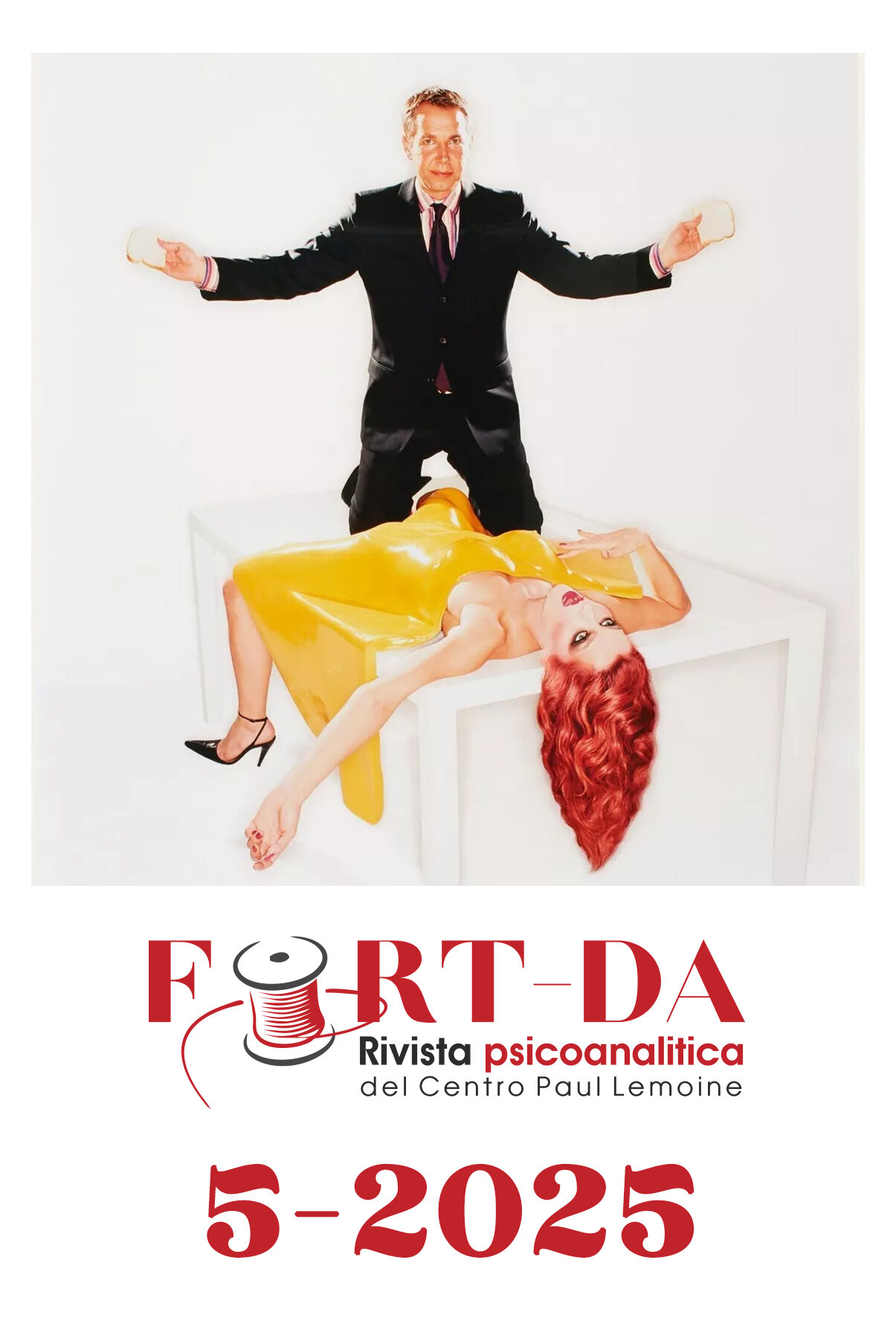
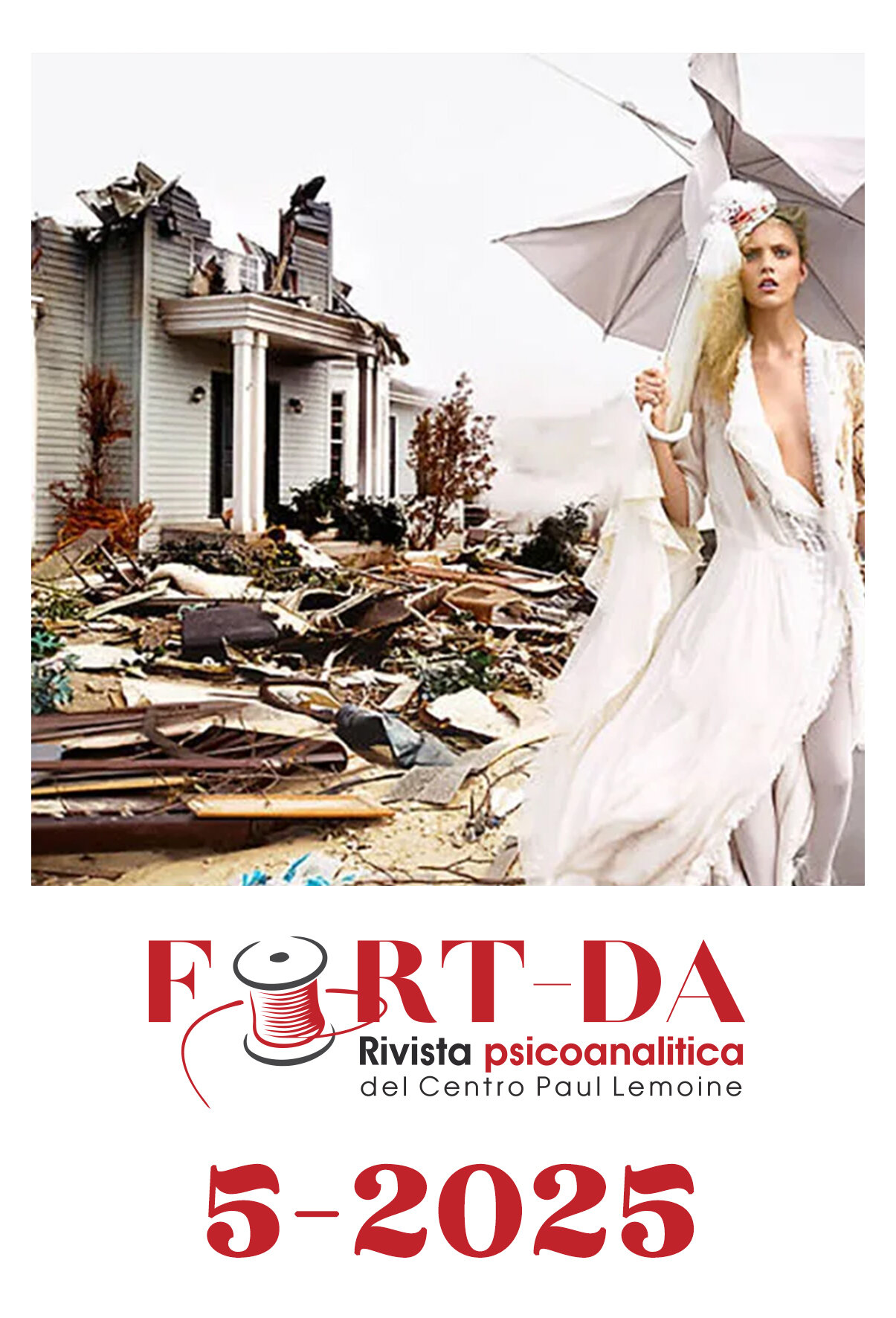
In the artistic landscape, David LaChapelle, an internationally acclaimed photographer who has infused contemporary photography with elements of pop culture and surrealism, is renowned for his ability to stage, through his images, a powerful critique of consumer society. His work explores a world saturated with excess, compulsive desire, materialism, and commodification, laying bare the contradictions and paradoxes of our time. His photographs are marked by a striking visual intensity and are rich in bodies, objects, synthetic beauty, and vivid color, elements he mobilizes in their most extreme forms to counteract a pervasive melancholy, which he sees as inherent to the human condition. LaChapelle frequently juxtaposes myth and popular culture, crafting provocative tableaux that challenge and seduce the viewer in equal measure.
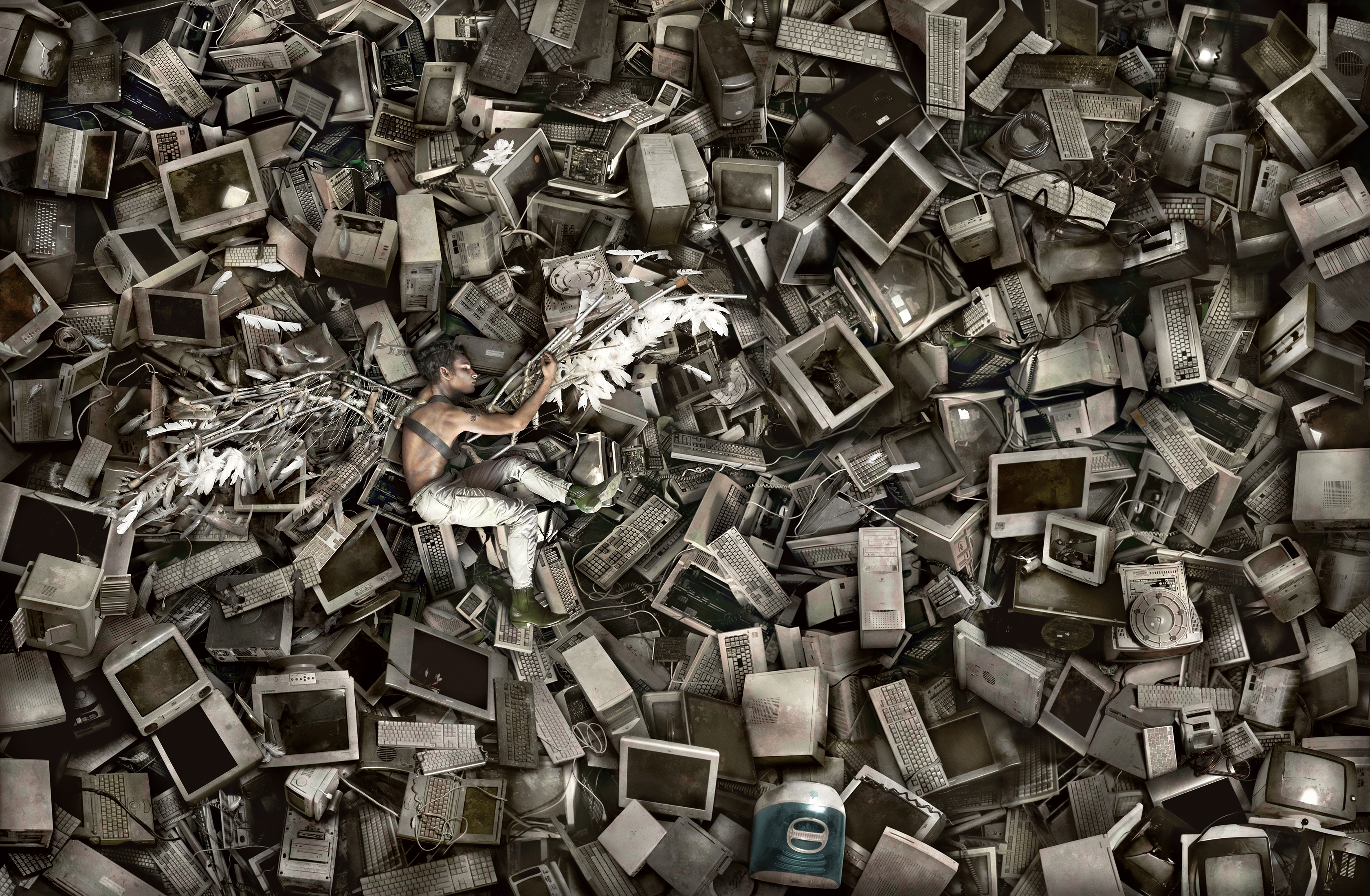
Within this context emerges Icarus, inspired by the Greek myth that tells the story of a young man in search of freedom, exalted by the euphoria of being able to fly with wings made of wax and feathers. He flew too close to the sun; the wax gradually melted, the feathers began to fall, and Icarus tragically plunged into the abyss of the sea. In this visual allegory, LaChapelle portrays the condition of the human being in the age of consumerism, highlighting its darker side. In the work, the artist represents a hypermodern Icarus, depicted as an erotic body, exposed and worn down by his illusion of reaching the heights of freedom. The boy ends up exactly like the pathological dependent, convinced he can rely solely on himself and achieve a desperate form of self-sufficiency through his object of dependency, only to be burned and consumed by it. The young man thus falls toward his ruin, plunging into an artificial valley of computers and screens, objects of his own alienation.
The same image of man’s fall, once again inspired by the Greek myth, emerges in the evocative verses of Baudelaire’s The Complaints of an Icarus:
The lovers of women from the street
have smooth skin and tranquil faces;
as for me, my arms are broken
from having embraced only clouds.
And so, from staring at the sky
ablaze with stars unseen before,
my eyes can bear no light,
and see now only ghosts of suns.
In vain I sought to find
the end and center of all space;
beneath some pupil made of fire,
I feel my wings turn weak and soft.
Burned by love for beauty,
I shall not have the glory
of naming the sea’s abyss
where my body will be buried.
In this poem, Baudelaire does not merely revisit the mythological figure, but reinterprets it, contrasting common men, who give in to physical and material pleasures, such as carnal or material pleasures, with the Icarus-poet, who soars toward an intangible horizon, trying in vain to embrace it, only to end up with “broken arms.” The “clouds” of Baudelaire, like the objects of addiction, are illusory freedoms that promise fullness, but leave only emptiness. The poet has burned his eyes in the attempt to reach “stars unseen before,” and this leap toward an unattainable entity leads to blindness, which no longer allows him to perceive the truth. Likewise, in a desperate reach for an ideal of self-sufficiency, the addicted subject clings to the object of his dependence, which ends up blinding and isolating him from reality. With “weak and soft” wings, his fall is not merely physical, but existential. The Icarus-poet, consumed by his ideal, sinks into oblivion. In the same way, the addicted subject, in the futile attempt to soothe the restlessness of desire, burns himself out and plummets into a physical and psychic abyss, overwhelmed by the very illusion that had sustained him.
In our contemporary society, everything moves fast, is consumed and replaced, even love and relationships are treated like perishable goods, objects to be used and then replaced. And so, in this frantic race through life in which everyone is “busy,” as Seneca would say, in pursuit of an ideal of freedom and self-sufficiency, pathological dependency takes shape, in which, in the paradox of believing oneself to be autonomous, one ends up a prisoner. Slaves to a market that, in order to keep people bound, does nothing but feed dissatisfaction, deceiving them into believing that it is possible to save them from the restlessness of desire and to anesthetize the lack and the pain of living.
Through the figure of Icarus, reinterpreted by LaChapelle and Baudelaire, we can see what happens when one flies toward an artificial sun: one believes they are rising toward something beyond being, in dignity and power, but in reality, they embrace only “clouds” and burn their wings, plummeting into the deepest abysses of their own existence. In the same way, those who try to fill their own lack with objects, substances, or relationships become hypermodern Icaruses, and end up being sucked into the vortex of their inner emptiness, a void that does not save, does not heal, but burns and consumes.
Perhaps the only way to free ourselves from the chains of our time is to slow down, to learn to feel lack, to recognize it, and above all, to accept it. Because it is not, contrary to what the market and society suggest, a defect to be corrected, nor something to repress or to fill, but rather an ontological condition of the human being, as Plato had already intuited. In the end, we are all made of lack, and it is precisely for this reason that we must welcome it and dwell within it, to set in motion, from the beginning, the very engine of life, and begin once more to desire, that is, to live.
BIBLIOGRAPHY
Baudelaire, Charles. The Flowers of Evil. Edited by Gesualdo Bufalino. Milan: Mondadori, 2017.
Baudelaire, Charles. Paris Spleen. Edited by Giovanni Raboni. Milan: Mondadori, 1992.
LaChapelle, David. Icarus, photograph, 2012. Brussels: Maruani Mercier Gallery.
Lacan, Jacques. The Seminar. Book XVII: The Other Side of Psychoanalysis. Edited by Jacques-Alain Miller. Turin: Einaudi, 2001.
Plato. Phaedrus. Edited by Giovanni Reale. Milan: CDE, 1998.
Plato. Republic. Edited by Mario Vegetti. Milan: BUR, 2007.
Plato. Symposium. Edited by Giovanni Reale. Milan: Bompiani, 2000.
Recalcati, Massimo. The Clinic of Emptiness: Anorexia, Addiction, Psychosis. Milan: Raffaello Cortina Editore, 2025.
Recalcati, Massimo. The New Melancholies: Destinies of Desire in Hypermodern Times. Milan: Raffaello Cortina Editore, 2019.
Seneca. On the Shortness of Life. Edited by Giovanni Reale. Milan: Rizzoli, 1996.
Freud, Sigmund. Civilization and Its Discontents. In The Works of Sigmund Freud, Vol. 10. Edited by Cesare L. Musatti. Turin: Bollati Boringhieri, 2002.
Article Cover: Icarus 2012 DavidLaChapelleHR